
Summer School: The Timeline of The Boardshort
From naked Hawaiians to Kelly Slater's Star Trunks: how the boardshort evolved decade by decade, and why the 1980s nearly ended it.
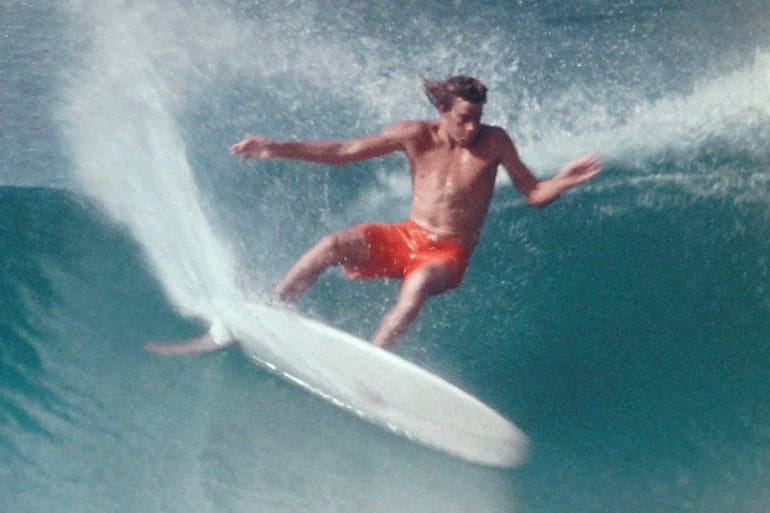
We are celebrating summer this month at Surf-Forecast, and nothing screams summer more than surfing in boardshorts. The freedom! The ease! The lack of a wet wetsuit. The cutoff for water temperature is an individual preference. Wim Hof probably backdoors Bundoran in his dick-stickers. In Bali, locals put on a neoprene vest when the water dips below a hot bath. Yet anything above 22 degrees C is the sweet spot to don the shorts. Our site logs the water temperature each day for more than 7,000 surf spots. Right now, we have Hossegor's water temp at 24.8 degrees Celsius. Uluwatu is 27 degrees. Puerto Escondido has topped 30, or 86 Fahrenheit on the old scale. That's all well above the boardshorts threshold, but where did this surfing staple come from? And where are they headed? We investigate.
The first surfers didn't need boardshorts. Or trunks, as the Americans call them. Or even boardies, as the Aussies prefer. The ancient Hawaiians surfed naked, which probably explains why wax wasn't invented till much later. The only thing the missionaries hated more than surfing was naked surfing, and they promptly banned it. Later in the early 20th century, when watersports became popular, men wore one-piece tank suits made of knitted wool. They weighed two tonnes wringing wet, and were quick-dry, taking only two weeks, if set to sail with sunny weather and fair winds.
Like a lot of things in surfing, the modern boardshort can trace its history to Hawaii. In the 1950s, the Oahu tailor Moru Nii, aka M.Nii, designed twill shorts that could take the beating thrown at the small group of big wave surfers tackling Makaha. These new shorts soon caught on and became known as Drowners. Moru was a good tailor, but not so hot on branding.
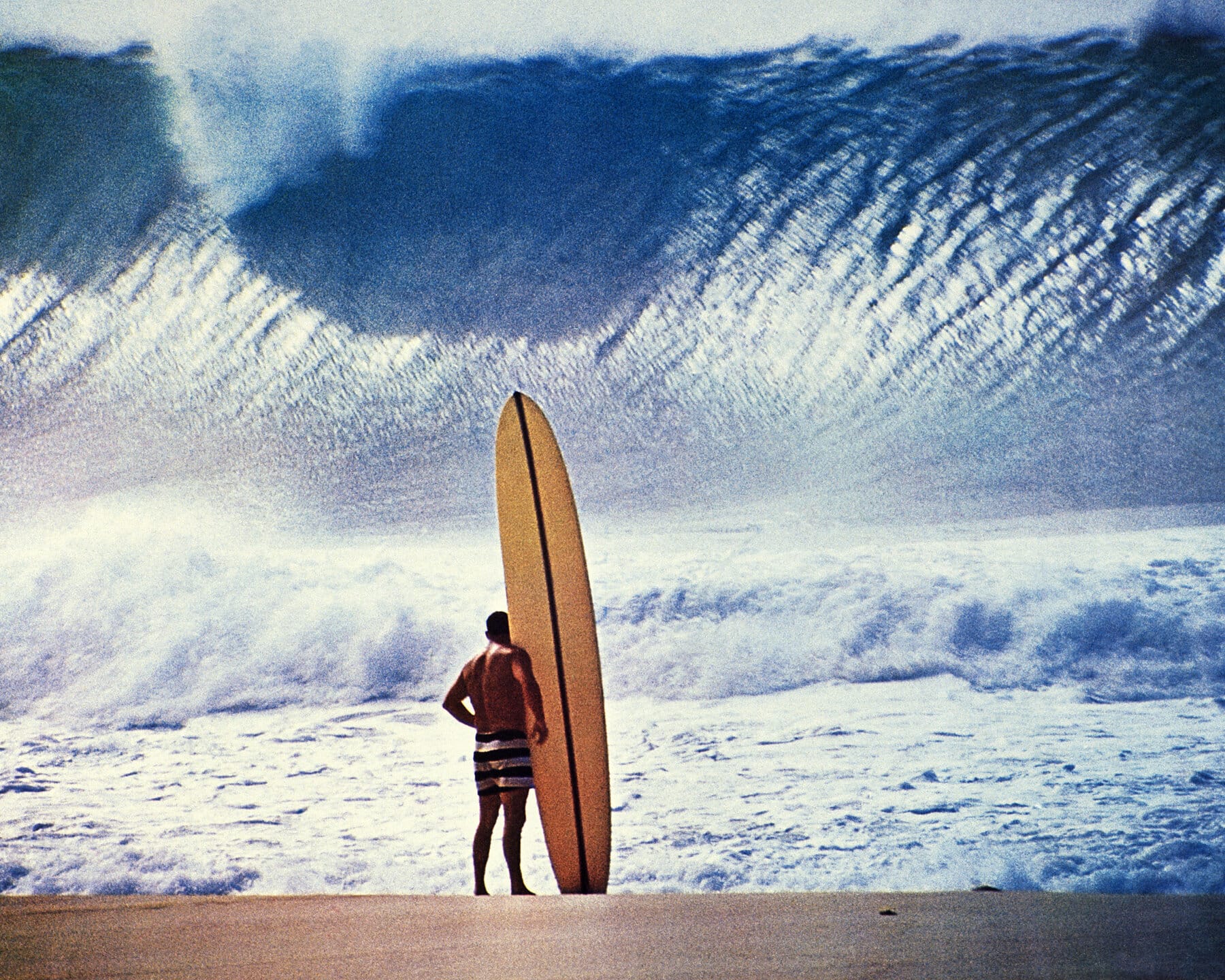
By the 1960s, Hang Ten had taken the drowner blueprint and started cutting cotton trunks in California. Gidget did for surfing what Taylor Swift does for arena tours, and Hang Ten rode that wave to become the sport's first proper commercial brand. When they signed their first team riders in 1966, Greg Noll was on the list. The Bull wanted his boardshorts a certain way, black and white stripes, loud enough to spot him from the beach at Waimea. He called them his prison shorts. Brown would have been more practical, given the size of the waves, but visibility was the whole point, and it worked.
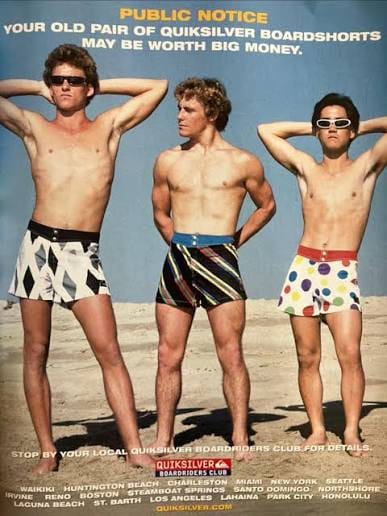
Hang Ten was also one of the first brands to adopt the quicker-drying, new nylon material in the late 1960s. Meanwhile, over in Australia, Quiksilver was formed and started selling "more technical" boardshorts from Torquay. Given the frigid waters near Bells, it was a string-bikini-in-Siberia business model, but one that took off nonetheless. A little later, Gordon Merchant, a surfer from Burleigh Heads, designed and made his own shorts and started selling them from his van. By 2007, his Billabong brand was valued at $4 billion, and he was selling the colourful boardies from a private jet.
The 1980s delivered stretch, via Lycra (stolen from triathlon swimsuits), neon and hemlines that were somehow higher than the first naked Hawaiian's. Tom Carroll, the 2x time World Champion, wore his Quiksilver shorts higher, tighter, and snugger than anybody else. One famous manoeuvre at Pipeline in his short shorts was called "The snap heard around the world." Though many experts believe the noise was actually his left testicle popping above the waistband.
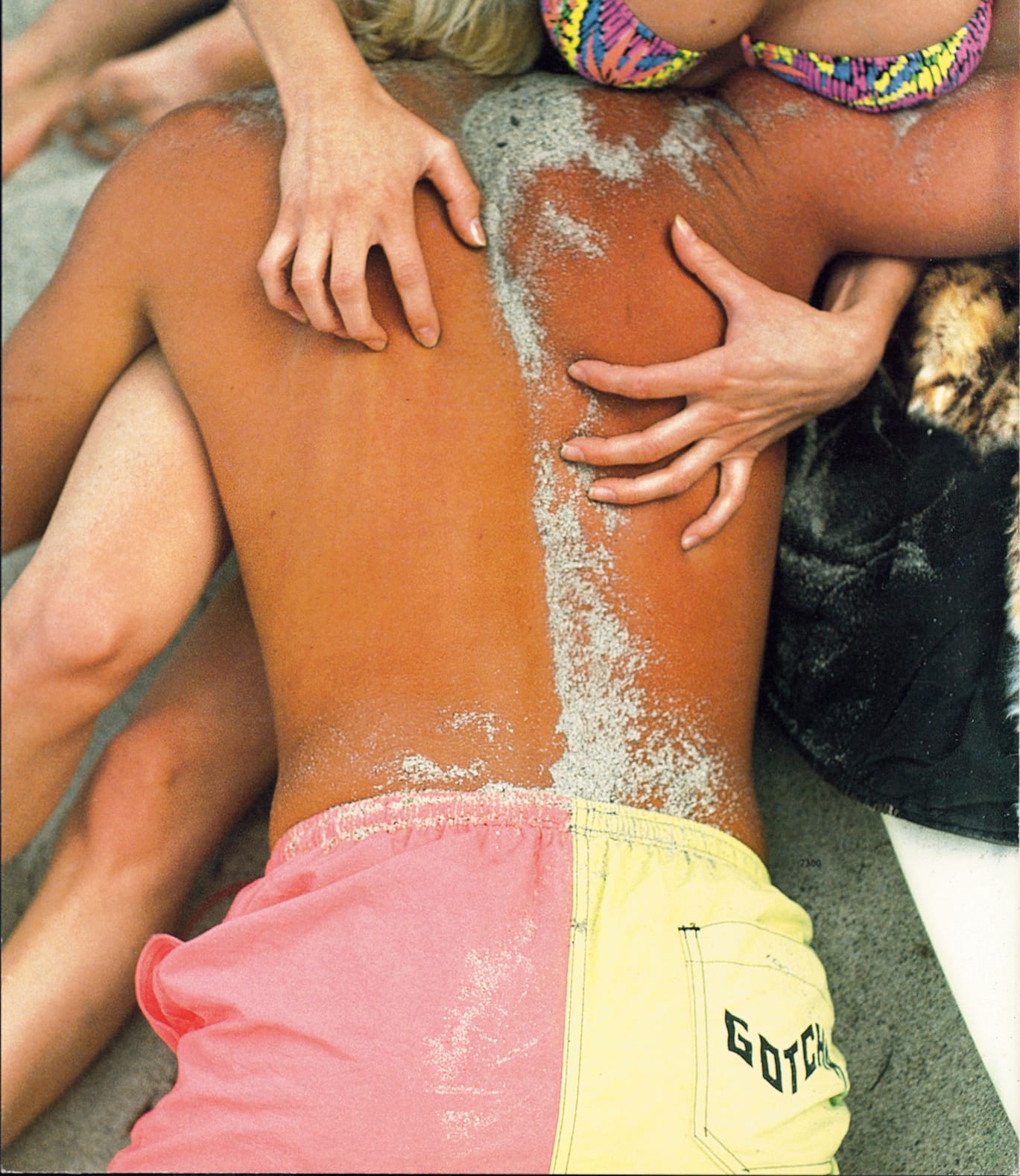
Not all technological breakthroughs were successful. Netted underwear sewn into the shorts appeared, and like other evils, including far-right politics, internet trolls and nut allergies, it has never really gone away. Neoprene shorts, even when worn by 1989 World Champion Martin Potter, never took off. Functional, sure, but like surf brand tattoos and coloured zinc cream, they defy the universe's aesthetic principles. However, Potter's sponsor Gotcha, the biggest surf brand of the '80s, added an attitude to the humble short that no one has since been able to replicate.
In 1992, Kelly Slater was revealed to the world through his seminal movie, Kelly Slater in Black and White. The Star Trunks he wore in the biopic would become almost as mythical as Joseph's technicolour Dryrobe. Back then, when you did get your hands on a pair, you never dared wear them surfing. He would later, after 11 World Titles, form his own brand called Outerknown, and develop his signature boardshorts. The Apex boardshort currently retails at £165 per pair, which, back in the 1950s, would have bought Gerry Lopez's house at Pipe.
However, first would come the nineties and the noughties. The overcorrection to the testicle-tickling trunks of the 1980s was two decades of bagged-out long shorts. Blame the Momentum Generation, rap, grunge, the NBA influence, or Andy Irons and his Rising Sun shorts. Whatever the source, for the better part of two decades, pantaloons became de rigueur for the first time since the 19th century.
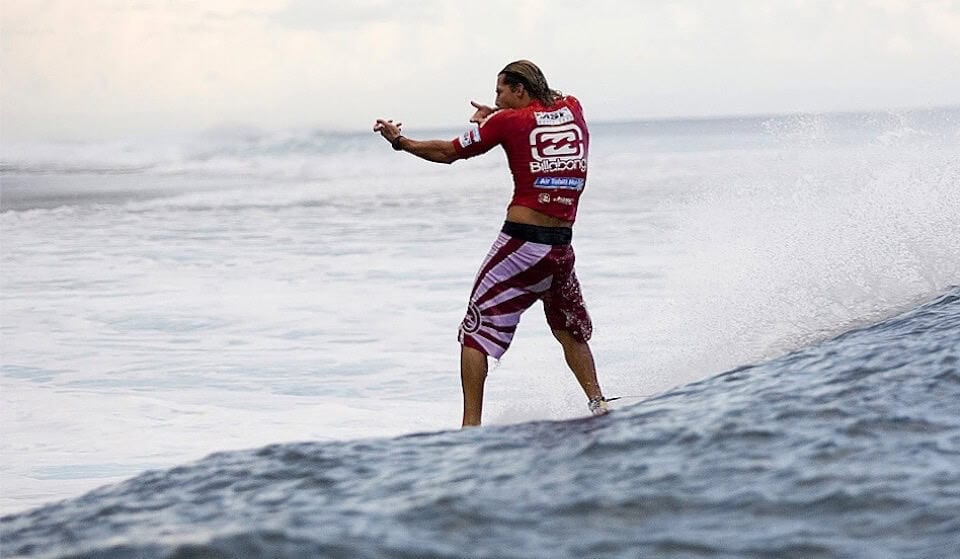
In the last decade, we've found some safe, middle ground in terms of above-the-knee length, and high-performance boardshorts have become, well, high performance. Laser-cut details, water-repellent recycled polyester, welded back pockets and internal bungee key rings aren't new features in NASA's Artemis system but common boardshort tech terms.
Now, sure, we know that fashion always loops back around. Kids are wearing knee-length 90s retro boardies. We can expect to see Gen Alphas riding mid-length twonkers at The Pass in knitted wool one-piece suits made of knitted wool, but right now, boardshorts are at the pinnacle of their design evolution. Wearing them is like surfing naked. Which, neatly, brings us back to the ancient Hawaiians.