The World’s Most Inconsistent Waves
Huntington, Dribbleton, Virginia, Holland and the Superbank!
We recently had a look at the world’s most consistent waves. This was based on the combination of swells and wind directed at 7,000 surf spots, as compiled from our data since 2006. Those stats, represented in easy-to-read graphics, are located under each wave’s spot guides, with historical swell and wind breakdowns available by month, season, and year. There is also an offshore filter, which shows how often the swells come with clean or offshore conditions.
But what of those waves that hardly break at all, and if they do, usually come with onshore winds? The world’s most inconsistent waves don’t usually get a shout-out, but they exist and are often surfed by a crew of hardcore locals. Now, some of those perhaps won’t be happy with their spots being called out, but the numbers don’t lie. And, spoiler alert, the Superbank gets a start!
Virginia Beach, USA
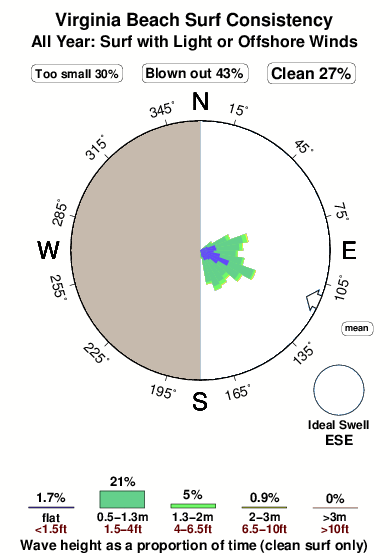
The lower section of the east, or right coast of the USA, is known for its warm water, quantity and quality of surfers and small waves. Sure, hurricanes provide windows of concentrated swell, and the Outer Banks can, and does, get world-class. Yet for Florida and Virginia surfers, it’s usually a case of the slimmest pickings. When we look at Virginia Beach since 2006, the average swell, under any wind, sees 36% of all days under 1 foot, and 33% between 1.5 and 4 feet. If we look at the break under clean conditions, it is too small 30% of the time, and blown out 43% of the time. With offshore overhead conditions so rare, it’s no surprise that a new Wave Garden pool, called Atlantic City, has been opened up, about 500 yards from the beach.
Scheveningen Pier, Holland
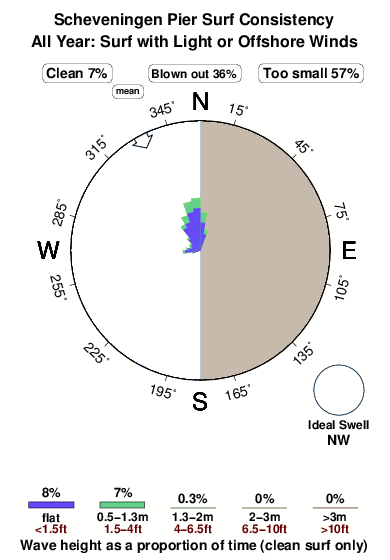
There is a small but hardcore community of Dutch surfers that surf any time there is any sniff of a wave in the North Sea. Those snifters, though, are pretty rare. The year-round stats show that one of its most popular waves, Scheveningen Pier, was flat 57% of the time, and 21% under 4 foot, with strong onshores blowing 41% of the time. It’s almost impossible to get clean conditions and swell, with that happening just 7% of the time. Yet when it's on, or at least breaking, the frothing Dutch are all over it.
Middleton, South Australia
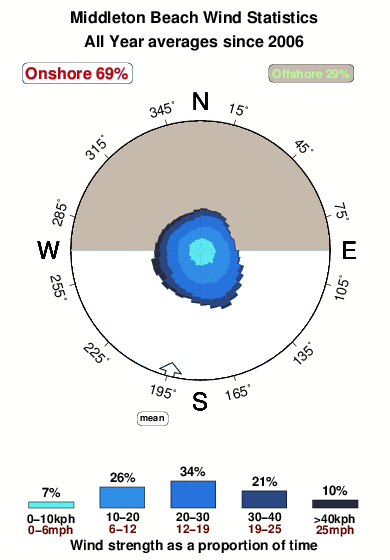
Well, it’s not called Dribbleton for nothing. Located in South Australia, which hosts some of the world’s gnarliest, remote, and epic waves, this protected bay close to Adelaide has been a punching bag since it started hosting the Australian Titles in the 1970s. The stats back it up. Of the limited occasions when the surf is clean, 94% of the time the surf is too small to surf. When there is onshore wind, which is most of the time, that only drops to 82%. Or as Surf-Forecast commentator recently posted. “Most swell at Midds are SSW and too straight to create any kind of rideable wave,” before adding, “Beach is presently closed with Australia's biggest white pointer (tagged) and a dead whale. Very disappointing summer.”
Huntington Pier, USA
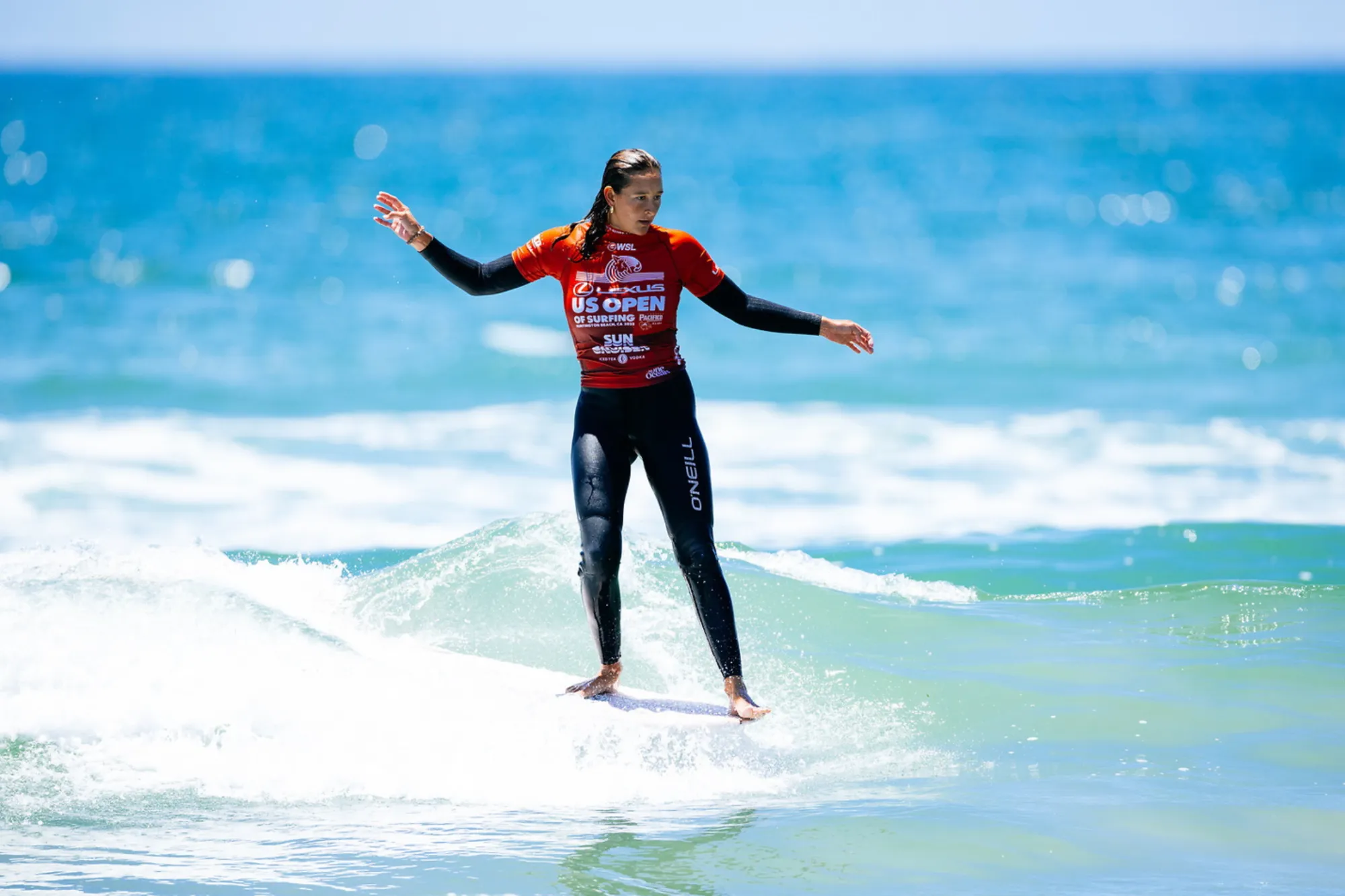
It might be known as Surf City and the home of the US Open since the 80s, but Huntington Beach ain’t exactly consistent. For the year average, for all wind conditions, the famous pier saw only 7% of all swells above four foot, and 25% of the time there was no swell at all.
When we look at the break under clean or offshore conditions, the data gets even worse, with the surf being too small to surf more than 75% of the time. And to think this place is the local swell magnet…
Brighton, UK
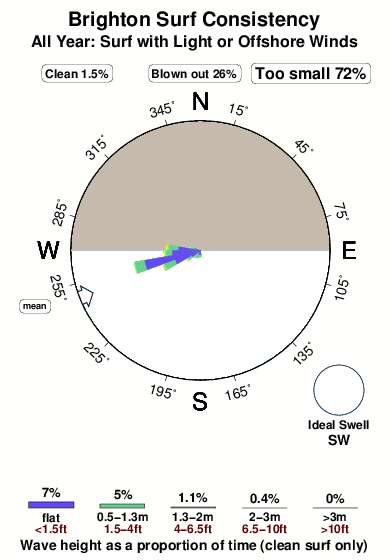
Look, this isn’t a diss. It’s actually a tribute to the thriving and uplifting Brighton surf community that maintains the froth despite dealing with the horrible numbers below. For the year stats, for any wind (of which there is plenty), the surf on the English Channel is flat 44% of the time, and under four foot for 28%. When we apply the offshore filter, Brighton has clean, rideable conditions at just 1.5% of the time. At the time of writing, the water temp was 8.3 degrees Celsius, and with a wind chill of -3 degrees. As we said, if you're a Brighton surfer, you’re a fucking legend.
The Superbank
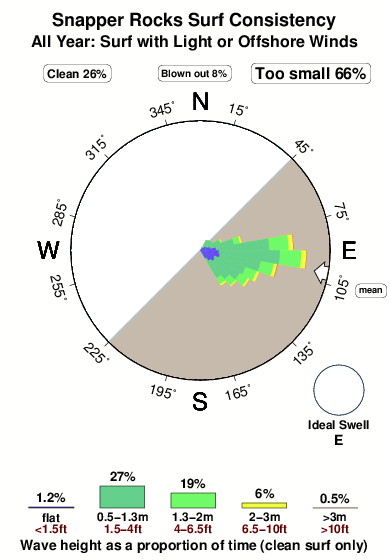
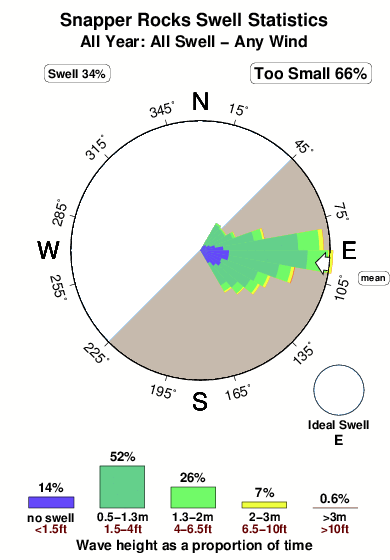
We’re tripping, right? How could one of the world’s best, most famous, and most crowded waves also be one of its worst? Well, if you’ve ever endured an entire spring staring into the teeth of an onshore nor-easter, looking for the mythical Superbank, you’ll know that this isn’t always a place of 10-second barrels and waves of a lifetime. The stats show that with offshore or light winds, Snapper doesn’t have swell 66% of the time. Across the year (the wave is heavily indexed from Jan to July), with all winds, it is flat 14% of the time, and under three feet another 52% of the time. Sure, it's not in the bracket of the waves above, but the numbers don’t lie. Or do they?